

KeyDots for Surgical Instrument Tracking
Overview
Reliable Identification Throughout the Instrument Lifecycle
KeyDots are small, durable barcode labels designed to support the identification and traceability of individual surgical instruments.
Applied directly to the instrument surface, each KeyDot contains a unique laser-engraved DataMatrix code. This allows instruments to be scanned and tracked throughout sterilisation, cleaning, storage and clinical use.
KeyDots provide an effective and affordable way to introduce individual instrument identification without permanently marking the instrument.
What Are KeyDots?
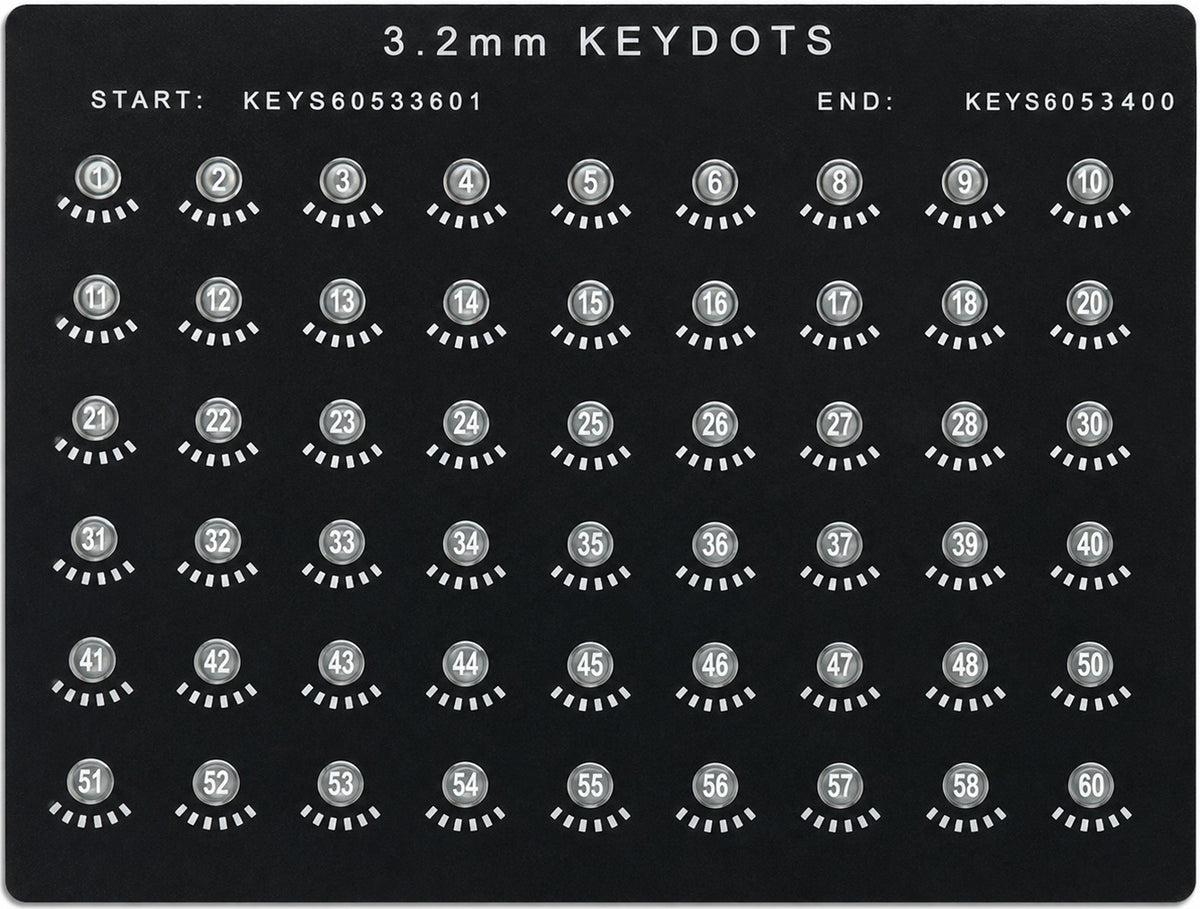
KeyDots are precision-engineered labels created specifically for surgical instrument tracking.
Each KeyDot can contain a unique identification number or an organisation’s GS1 code, linking the instrument to its corresponding record within an instrument tracking system.
KeyDots are available in a range of sizes, starting from just 3.2 mm in diameter, making them suitable for instruments where the available marking area is limited.
Designed for Demanding Healthcare Environments
KeyDots are manufactured to withstand the challenging conditions encountered during instrument processing.
They can:
- Withstand repeated cleaning and sterilisation processes
- Remain readable for up to 200 processing cycles
- Support individual instrument identification
- Be incorporated into many existing instrument tracking systems
- Carry unique serialised or GS1-compliant information
- Be scanned using compatible 2D barcode scanners
KeyDots have also been independently evaluated for sterility and biocompatibility, helping ensure they are suitable for use on surgical instruments.
Supporting Surgical Instrument Traceability
Once applied, the KeyDot connects the instrument to a digital record within the hospital’s tracking software.
The instrument can then be scanned at key stages of its lifecycle, helping healthcare organisations maintain a clearer record of:
- Instrument cleaning and decontamination
- Sterilisation cycles
- Tray assembly
- Theatre use
- Maintenance and inspection
- Instrument location and availability
This provides greater visibility of individual instruments and can support more accurate record keeping across sterile services and clinical environments.
How Are KeyDots Applied?
KeyDots can be applied directly by healthcare or sterile services teams.
Before application, the selected area of the instrument should be thoroughly cleaned to remove grease or contaminants. The KeyDot is then lifted from the sheet using tweezers, positioned on the instrument and pressed firmly to ensure complete contact.
The instrument is then sterilised, helping the adhesive form a strong bond with the instrument surface.
Barcode Scanning for KeyDots
KeyDots use DataMatrix barcodes and must be read using a compatible 2D barcode scanner.
Bar Code Data can supply handheld and fixed-position scanners to support different surgical instrument tracking processes, alongside advice on selecting suitable equipment for your environment.
KeyDots from Bar Code Data
Bar Code Data combines specialist healthcare labelling knowledge with extensive experience in barcode scanning, traceability and tracking technologies.
We can support your organisation with KeyDots, barcode scanners and guidance on incorporating individual instrument identification into your wider tracking process.
Improve Surgical Instrument Traceability
Speak to our healthcare identification specialists about KeyDots for surgical instruments.
Contact us to discuss your requirements or request KeyDot samples.